The tourism and hospitality industry demands more than just classroom theories; it requires mental readiness and authentic service standards. To provide a professional perspective on hospitality management, the Tourism Study Program hosted Faradilla, HR Manager of The Alana Yogyakarta Hotel & Convention, for a guest lecture titled “Hospitality Management in Star-Rated Hotels: Challenges and Opportunities” on Wednesday (08/04).
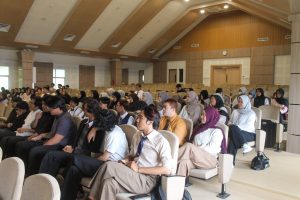
Held at the Poerbatjaraka Auditorium, Faculty of Cultural Sciences (FIB) UGM, the session allowed students to peek behind the curtain of the industry. The discussion went beyond technical skills, opening students’ eyes to the critical role of character and empathy in building a successful career.
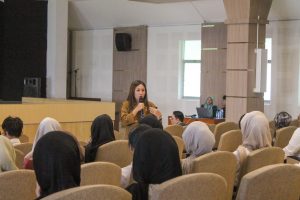
From “production tools” to brand ambassadors. As an HR Manager at a five-star property, Faradilla shared the secrets behind The Alana’s success in the digital era. She highlighted a paradigm shift: moving away from viewing employees as mere “production tools” bound strictly to rules, toward seeing them as influential “Brand Ambassadors.”
“In a five-star environment, we face high standards, perfectionist guests, and fierce competition. We had to find a way to maintain these standards without making our staff feel like robots,” Faradilla explained.
The formula: Fun at Work. The solution lies in a philosophical approach called “Fun At Work.” Faradilla clarified that this doesn’t mean playing around, but rather working with a light heart, enthusiasm, and without excessive fear. She introduced an internal formula: Internal Joy + SOP Excellence = Unforgettable Guest Experience “Guests return because of exceptional services. Happy employees create happy guests,” she added.
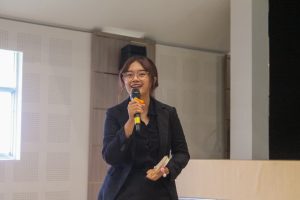
The manager as a Conductor, Faradilla emphasized that a manager acts as a conductor creating harmony. Key strategies to implement “Fun At Work” include Removing Barriers: Managers should clear operational hurdles so staff can work comfortably. Inclusivity: Breaking the hierarchy by mingling with staff, such as sharing meals in the canteen rather than staying exclusive to boardrooms. Psychological Safety: Creating an environment where staff feel safe to report mistakes without fear of immediate punishment.
By adopting this culture, rigid SOPs transform into spaces for authentic improvisation, and high-pressure environments are softened by a culture of appreciation (such as a simple “thank you”). To combat high turnover rates, Faradilla suggests showing employees the direct impact of their work on guest well-being, which fosters deeper loyalty.
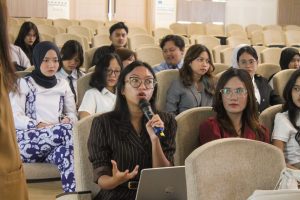
Attitude Over Skills for Fresh Graduates. The session peaked during a Q&A where students asked about competing with Artificial Intelligence (AI) and how to stand out as fresh graduates without formal experience. Faradilla’s response was both reassuring and motivating: Attitude is paramount. “Technical skills can be taught, but attitude is foundational. High-level skills mean very little if one cannot maintain a professional and positive attitude,” she remarked.
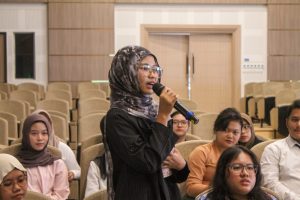
Supporting Global Goal. This guest lecture serves as a “compass” for students preparing for internships and the global job market. By understanding the HR perspective, students can now build stronger portfolios and sharper personal branding.
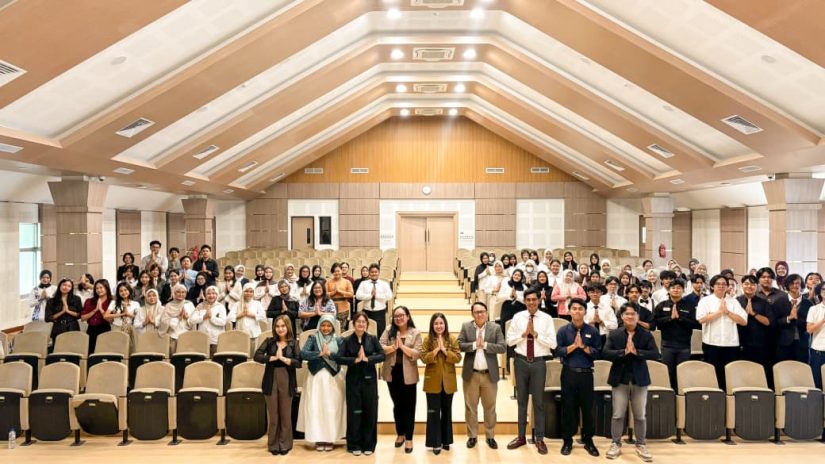
The event concluded with a group photo and the distribution of appreciation gift to active participants. This initiative by the Tourism Study Program directly supports Sustainable Development Goal (SDG) No. 4: Quality Education, by fostering critical dialogue and inclusive knowledge exchange between academia and the industry.
Author: Faiq
Editor: Popi
Photo: Tourism Study Program